Castle Atlas / No. 88
Yoshinogari Site
吉野ヶ里
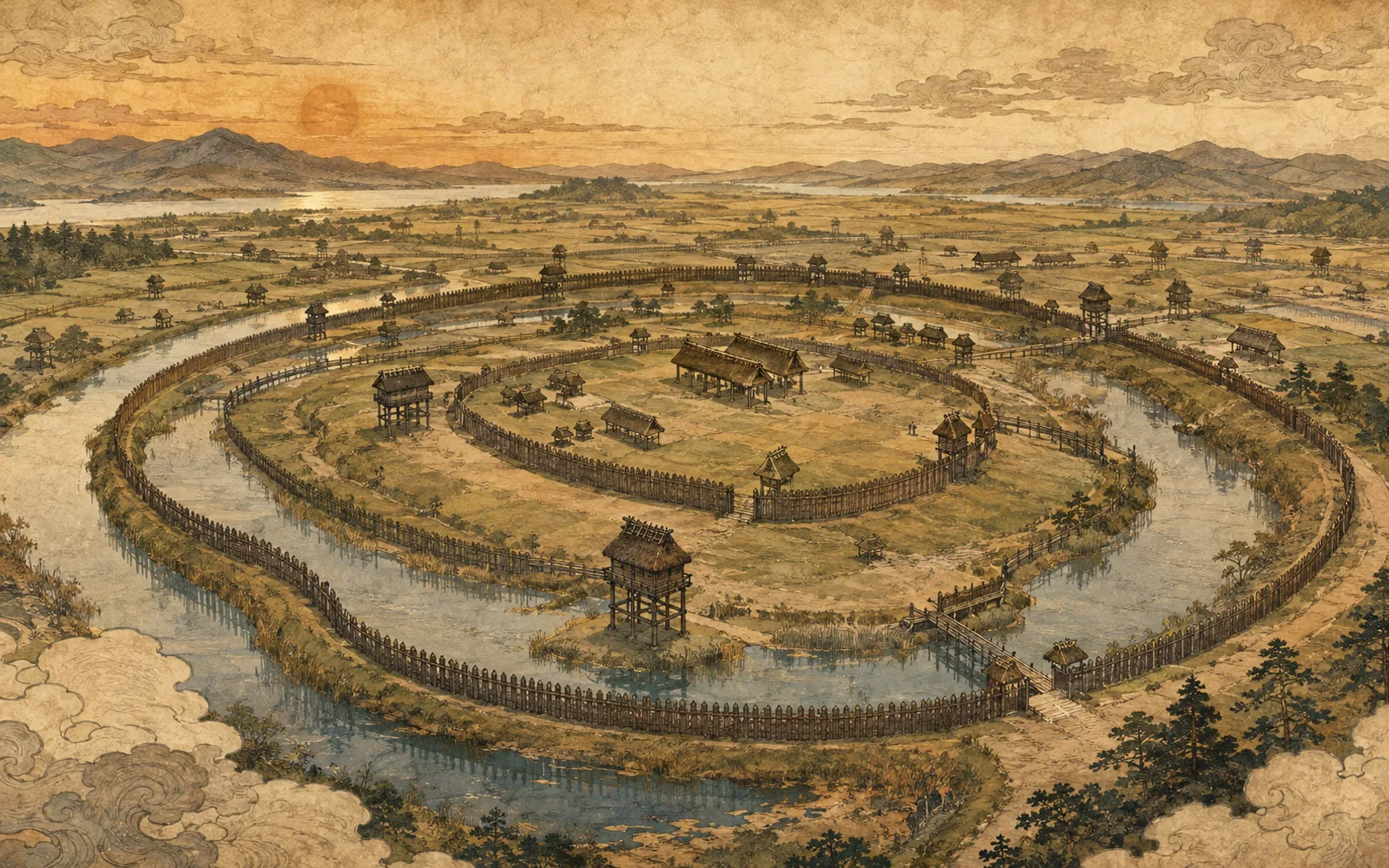
Yoshinogari expands the atlas beyond samurai castles: the Foundation includes this Yayoi-period moated settlement as a fortified landscape, not a keep-centered castle.
History
What historically stood here
The Japan Castle Foundation records 吉野ヶ里 as a 平城(環壕集落) site in 神崎郡吉野ヶ里町, with the founding label 弥生時代. The listed builder or associated clan is not specified in the Foundation row; principal lords are not specified in the Foundation row.
The site’s history spans Yayoi period, modern archaeological park.
Today
What you are actually seeing today
You are seeing reconstructed and interpreted archaeological features, moats, palisades and settlement planning rather than a medieval tower or Edo castle park.
- Current condition
- Reconstructed gates, turrets or buildings
- Terrain
- Hirajiro: flatland castle
- Condition note
- Reconstructed: 物見櫓、櫓門. Classified 2026-09-24 from the structured fields at https://cmeg.jp/w/castles/9250.
Architecture And Defense
How to read the place
- moated settlement
- palisades
- archaeological interpretation
- large park landscape
Cultural-property notes in the Foundation row: 国指定特別史跡.
Visit
Present-day visitor information
Archaeological park; check Yoshinogari Historical Park for current hours and event access.
- Address or access location
- 佐賀県神埼郡吉野ヶ里町田手/神埼市
- Coordinates
- 33.324633, 130.384982
- Nearest useful station
- Yoshinogari-koen Station or Kanzaki Station depending on entrance
- Estimated visit duration
- 2-4 hours
- Opening hours
- Check the official visitor source.
- Admission
- Check the official visitor source.
Seasonal planning note
- The exposed park landscape makes heat, rain and walking distance important.
Nearby
Castles close enough to compare
Kurume Castle
Fukuoka / Stonework and earthworks
Saga Castle
Saga / Original buildings, no keep
Kii Castle
Fukuoka / Stonework and earthworks
Mizuki Castle
Fukuoka / Stonework and earthworks
Sources
Source and correction context
Identity, list membership, Foundation list number, municipality, basic classification and cultural-property notes are source-verified. Site-level visitor details require additional review unless this record is publishable. Foundation numbers are official list identifiers, not rankings. Coordinates use the Foundation-linked position-data KML and should be treated as visitor-planning coordinates rather than archaeological survey points.
Sources
- Japan's Top 100 and Continued Top 100 Castle Position Data, Japan Castle Foundation / Nippon Castle. Accessed 2026-09-04. Used for the 200 castle addresses and coordinates exposed through the public map linked from the Japan Castle Foundation castle-search page.
- Japan's Top 100 Castles, Japan Castle Foundation. Accessed 2026-09-04. Used for the official identity, list number, list membership, location municipality, castle type, founding label, builders, principal lords, cultural-property notes, and keep-status notes for the original 100-castle selection.
- 100 Fine Castles of Japan and Continued 100 Fine Castles of Japan, Wikipedia contributors. Accessed 2026-09-04. Used only as a secondary cross-check for common English castle names; Japan Castle Foundation records remain the corpus source of truth.
- Nippon Shiro Meguri castle records: keep structure, remains and rebuilt structures, Nippon Shiro Meguri (cmeg.jp). Accessed 2026-09-24. Structured fields for each of the 200 castles, used to classify what stands at each site today. The linked record for each castle is its coordinate source.