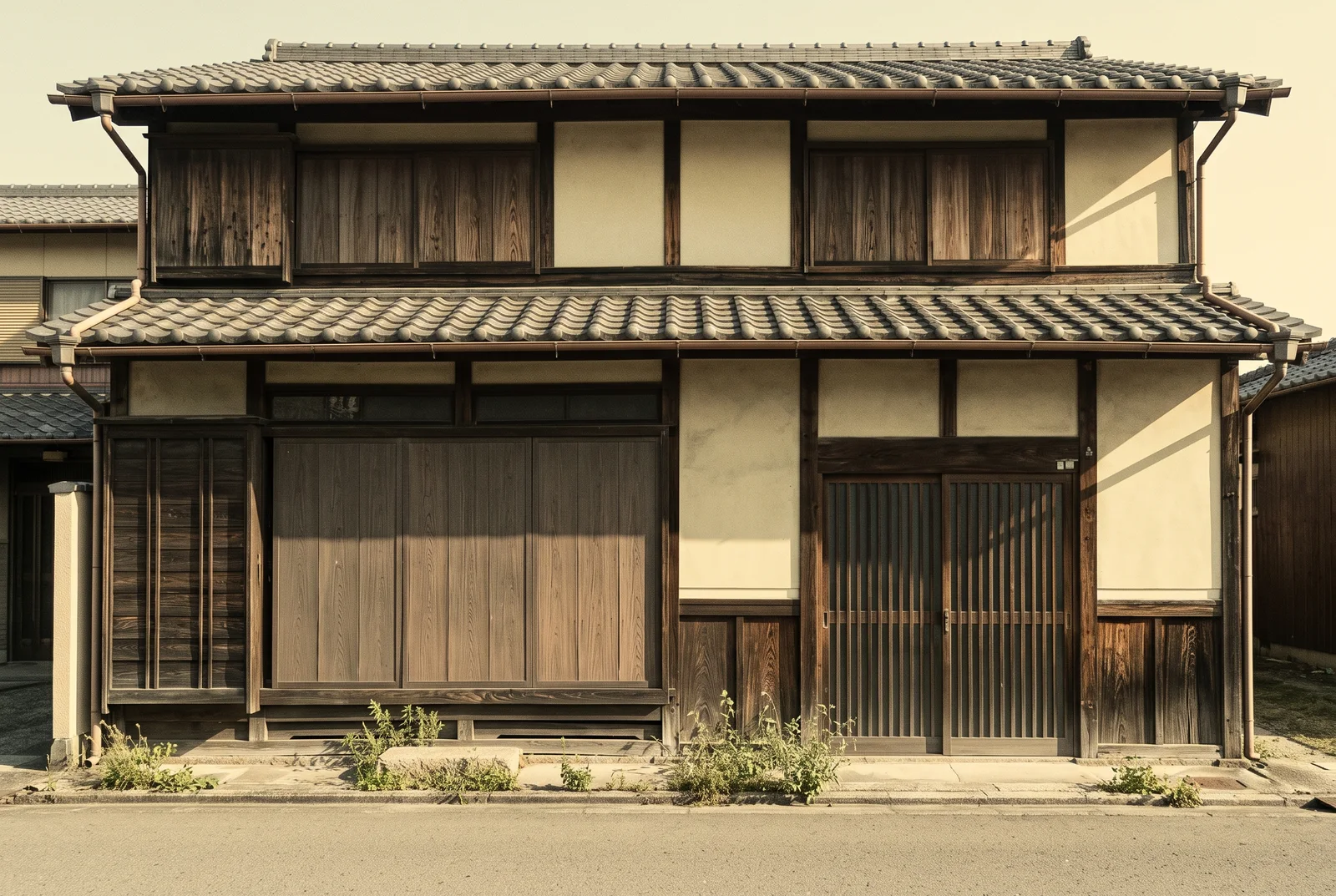
Ito, a hot-spring town on the Izu Peninsula, and Tosashimizu, a fishing city near the southwestern tip of Shikoku, share an unusual number. In Japan’s 2023 Housing and Land Survey, 39.5% of the homes in each place had nobody living in them.
The similarity ends there. In Ito, more than half of those empty homes are second homes: holiday flats and weekend houses whose owners live somewhere else. In Tosashimizu almost none are. A third of all its dwellings fall into the survey’s most awkward category: vacant homes that are not for rent, not for sale and not anyone’s holiday house. Nobody lives there, and nobody is planning to.
That second kind is what Japanese news reports usually mean by akiya, and it is the kind that keeps growing.
Ito Shizuoka · 39.5% vacant
Tosashimizu Kochi · 39.5% vacant
Nine million, but not one kind
The survey, which the Statistics Bureau runs every five years, found 9.0 million vacant homes on October 1, 2023. That was 13.8% of the country’s 65 million dwellings, and both figures were records. The number gets quoted often as proof that Japan is full of abandoned houses. It is less dramatic than it sounds. Almost half the total, 4.4 million, is rental units waiting for tenants, mostly in apartment buildings. Another 710,000 are for sale or are second homes.
The remaining 3.9 million are what this atlas calls idle homes: 5.9% of all housing. They are mostly detached houses. Of Japan’s 3.5 million empty detached houses, 81% are idle; empty apartments are overwhelmingly rentals. Idle homes have roughly quadrupled since 1978, while the housing stock grew by less than double. In 2023 the national transport ministry projected 4.7 million by 2030.
- 19782.7m
- 19883.9m
- 19985.8m
- 20087.6m
- 20188.5m
- 20239.0m
Where the idle homes are
Rank prefectures by total vacancy and the top five are Tokushima (21.3%), Wakayama (21.2%), Kagoshima (20.5%), Yamanashi (20.4%) and Kochi (20.3%). Yamanashi and neighboring Nagano owe a lot of that to holiday homes around the Fuji lakes, Yatsugatake and Karuizawa. Second homes make up a fifth of Yamanashi’s vacant stock and more than a quarter of Nagano’s.
Rank them by idle homes and the map moves southwest. Kagoshima leads at 13.6%, followed by Kochi (12.9%), Tokushima and Ehime (12.2% each) and Wakayama (12.1%): Kyushu’s far south, Shikoku and the Kii Peninsula. At the other end are Tokyo (2.6%), Kanagawa (3.2%) and Saitama (3.8%).
Tokyo is the useful surprise. It has more vacant homes than any other prefecture, almost 900,000, but 70% of them are rental units between tenants. That churn is a sign of a busy housing market, not an emptying one.
Across the 47 prefectures, the idle-home rate follows age closely. It rises with the share of residents aged 65 and over (a correlation of 0.82) and with population loss between the 2015 and 2020 censuses. Age is not the whole story, though. Akita is Japan’s oldest prefecture, with 39% of residents 65 or older, and it lost 6.2% of its people in five years, but it ranks eighth for idle homes. Aomori and Iwate lost population as quickly as Kochi and rank 15th and 16th.
