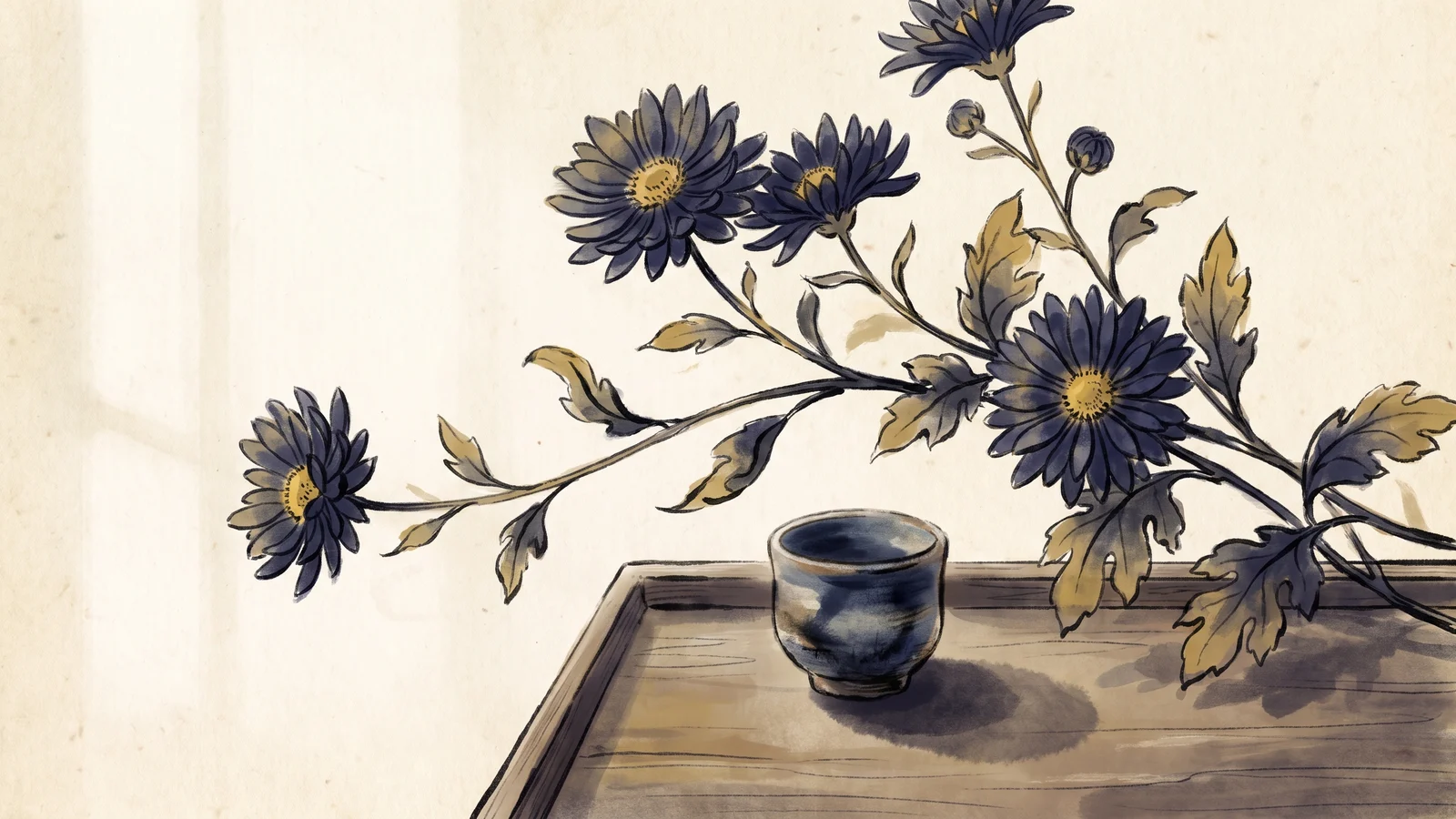
September’s sake cup belongs to the chrysanthemum suit. Its imagery connects to Choyo no Sekku, the festival held on the ninth day of the ninth month. Kokugakuin University’s Encyclopedia of Shinto describes Choyo as the Chrysanthemum Festival and connects it with chrysanthemum-petal wine and longevity wishes.
SHUN GATE’s Choyo no Sekku article, based on an interview with a Washoku Association of Japan researcher, adds food-culture context: chestnut rice and chrysanthemum flower liquor are representative festival foods, even as Choyo became less prominent in everyday life than other seasonal festivals.
Festival imagery
The sake cup is a stylized image associated with the festival. It does not document how a particular household or community observes Choyo.
How the cup scores
Koi-Koi’s current ruleset treats the September sake cup as an animal/object card. It can also combine with August’s moon card for Tsukimi-zake and with March’s curtain card for Hanami-zake when those combinations are enabled. The app’s documentation notes that rules can vary, including the question of whether the sake cup also counts as chaff.
How We Know
Festival context comes from Kokugakuin University, SHUN GATE, and historical image leads from the National Diet Library Image Bank. Koi-Koi card behavior comes from the app’s rules documentation and is identified as the app’s ruleset, not a universal standard.
Sources
- Choyo, Kokugakuin University Digital Museum, Encyclopedia of Shinto. Accessed 2026-09-01. Used for Choyo no Sekku, chrysanthemum wine, and festival history.
- September 9, Choyo no Sekku, SHUN GATE / Washoku Association of Japan interview. Accessed 2026-09-01. Used for food-culture context around Choyo no Sekku.
- Choyo-no-Sekku (Chrysanthemum Festival), National Diet Library Image Bank. Accessed 2026-09-01. Used for historical visual source leads related to Choyo no Sekku.
- Koi-Koi - Rules & Variants, Koi-Koi repository. Accessed 2026-09-01. Used for the current Koi-Koi ruleset and house-rule disclosure.