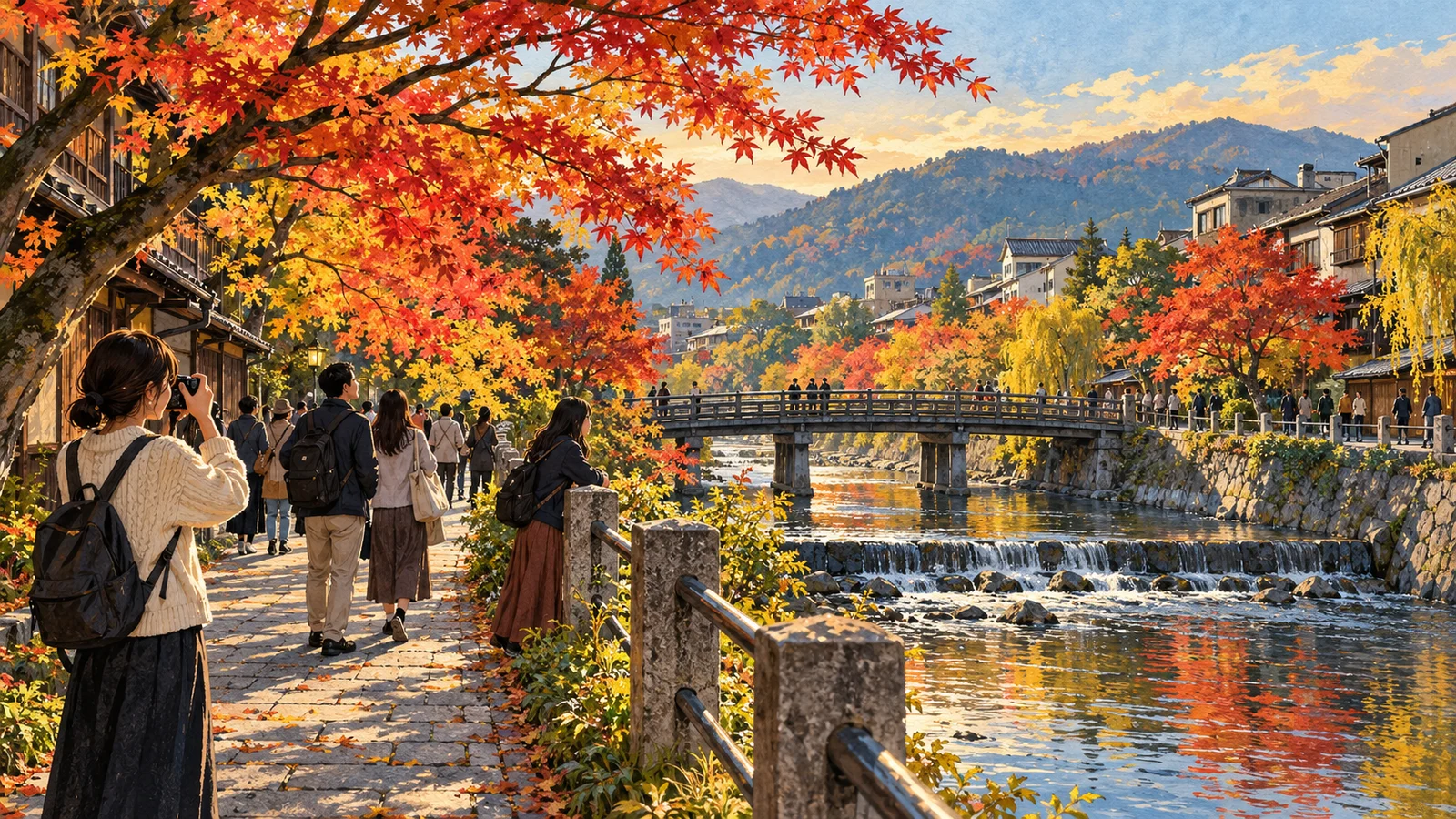
Momijigari means going out to seek and appreciate autumn leaves. The word joins momiji, colored autumn foliage or maple, with gari, hunting. The hunt is an outing, not a harvest. People walk in mountains, temple grounds, gardens and hot-spring towns to see the color where it is strongest.
Japan National Tourism Organization describes the custom as an autumn counterpart to spring blossom viewing. Its history guide traces elite leaf-viewing outings to the Heian period and says the practice had spread more widely by the eighteenth century.
October Starts The Season
Autumn color does not arrive everywhere at once. It begins in northern and high-altitude areas, then moves south and into lower elevations. That makes October a strong month for Hokkaido, Tohoku and mountain routes, while many famous lowland sites in Kyoto, Tokyo and Nara reach their best color later.
A fixed national peak date would be misleading. Weather, elevation and location change the timing each year. Check a current local forecast close to the trip.
Momiji And Koyo
Koyo is the changing color of autumn leaves. Momiji often points more specifically to maple or vividly red leaves, though the terms overlap in travel writing and everyday use. Ginkgo contributes yellow, while maples supply much of the red associated with the season.
The Hanafuda Connection
October is the maple suit in Hanafuda. Its four cards show a deer, a blue ribbon and two chaff cards among red maple leaves. The deck turns a moving natural season into a fixed monthly suit. The foliage outside still keeps its own schedule.
How We Know
Contemporary leaf-viewing language, travel patterns and the north-to-south progression come from Japan National Tourism Organization’s autumn-leaves guides. Its cultural history guide supplies the historical outline. The Hanafuda month structure is documented separately by Nintendo Museum.
Sources
- Momijigari: How to enjoy autumn in Japan, Japan National Tourism Organization. Accessed 2026-09-30. Used for the meaning of momijigari, contemporary leaf-viewing outings, and autumn travel context.
- History & Culture of Koyo, Japan National Tourism Organization. Accessed 2026-09-30. Used for the history of autumn-leaf viewing and the deer-and-maple pairing in Japanese visual culture.
- Autumn Leaves (Koyo) of Japan, Japan National Tourism Organization. Accessed 2026-09-30. Used for the north-to-south progression of autumn color and contemporary viewing guidance.